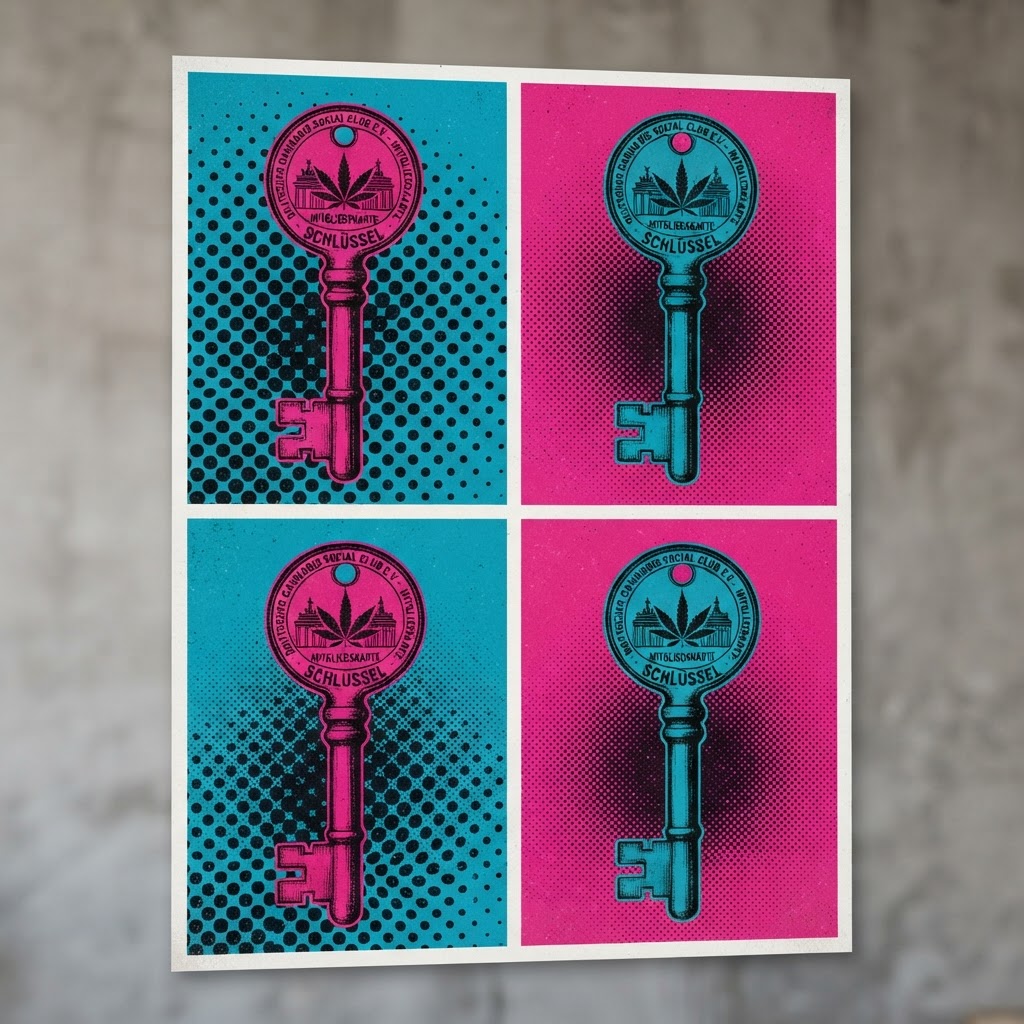
Street Poetry in Hamburg: The Failed Coup Against Germany’s Social Clubs
In a high-stakes standoff in Hamburg, German ministers failed to gut the cannabis social club model. The community-led craft revolution holds its ground against the old guard's attempt to restore the narcotics shadow.
The Hardline Standoff
The cobblestones of Hamburg served as the backdrop for a classic political stencil of resistance this past June. At the conference of Germany’s 16 state interior ministers (the IMK), a hardline proposal from the state of Hesse sought to effectively spray-paint over the progress made since the 2024 CanG legalization. Hesse's interior minister, Roman Poseck, brought a four-part manifesto of prohibition: a blanket ban on public consumption, a freeze on new cultivation-association licenses, and a rollback of the legal possession limits. It was a play to return cannabis to the 'narcotics law' shadows, using the gritty aesthetic of old-school enforcement.
The Victory of Unanimity
But the social club movement in Germany is no longer a fragile sketch; it is a permanent installation. In a move of high-contrast defiance, the two most damaging parts of the proposal—the license freeze and the total public ban—were soundly rejected. Because the IMK operates on a principle of unanimity for significant policy shifts, the 'Hesse Hardline' failed to gain the traction needed to derail the craft revolution. This isn't just a win for the clubs; it’s a victory for the 'Pillar 1' model that prioritizes community and health over commercial profit. Berlin, Hamburg, and Munich remain the epicenters of this neon-green insurgency.
The Social Club Aesthetic
What makes the German model so rebellious is its non-profit, community-centric core. These 'Anbauvereinigungen' are the street-level labs where the future of European genetics is being forged. With over 500 members per club, these spaces are more than just supply points; they are the high-end galleries of the culture. The recent rejection of the licensing freeze ensures that the diversity of the 'botanical anatomy' will continue to flourish. While the government continues to drag its feet on 'Pillar 2'—the regional commercial pilot programs—the social clubs have proven themselves to be the resilient, ink-stained heart of the industry.
Looking Toward Pillar 2
The failure of the prohibitionist push in Hamburg clears the way for the next registration of the German master plan. As we move through July 2026, the draft legislation for the regional commercial pilots is finally gaining texture. We are seeing a move toward a fully commercial supply chain that will complement, not replace, the social clubs. The German cannabis landscape is a complex, layered piece of art—messy, vibrant, and fiercely defended by those who refuse to let the old guard reclaim the canvas. The clubs are here to stay, and the craft is only getting louder. Sources: Cannabis-Startups.com (July 1, 2026), Cannabis-Europa.com (March 2026 Business Guide), Newswire.ca (Feb 23, 2024).