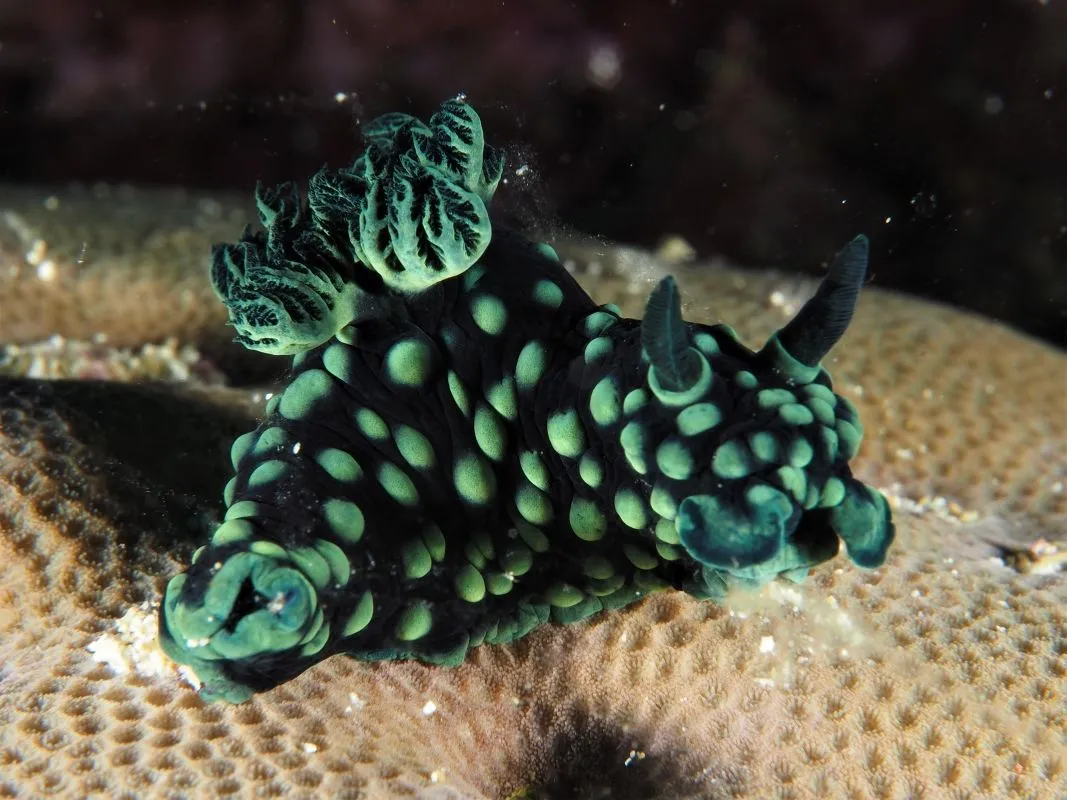
Nembrotha Cristata – The Alien Crested Nudibranch
If someone designed an alien sea creature in a sci-fi movie, it would probably look exactly like Nembrotha cristata — a striking black-and-green sea slug with ruffled “cabbage-like” gills, polka dots, and a dramatic crest. This flamboyant nudibranch is one of the most photogenic critters on tropical reefs.
Quick Facts
- Scientific Name: Nembrotha cristata (Bergh, 1877)
- Common Names: Crested Nembrotha, Cabbage Nudibranch
- Family: Polyceridae
- Size: Up to 5–6 cm (2–2.4 inches) long
- Habitat: Tropical coral reefs, rocky substrates, often near sponges
- Distribution: Indo-West Pacific (Indonesia, Philippines, Papua New Guinea, Malaysia, and surrounding waters)
- Diet: Primarily feeds on colonial ascidians (sea squirts)
- Status: Common in suitable reef habitats; a favorite of underwater photographers and divers
Appearance & Identification
This nudibranch is instantly recognizable by its jet-black body covered in bright lime-green spots and blotches. Key features include:
- A prominent crested ridge running down the back
- Large, highly branched pale green gills that look like miniature cabbages or lettuce
- Two dark rhinophores (sensory tentacles) on the head
- A frilly oral veil at the front
The vivid contrast between black and glowing green makes it stand out dramatically against coral reefs.
Habitat, Distribution & Ecology
Nembrotha cristata thrives in shallow to moderate-depth tropical reefs (usually 5–30 meters). It is often found crawling over sponges or ascidians, which serve as both home and food source. Like many nudibranchs, it sequesters toxins from its prey (ascidians) and uses them for its own chemical defense — making it unpalatable to most predators.
Behavior, Life Cycle & Superpowers
- Chemical Defense: Stores nasty compounds from sea squirts in its skin and can release them if threatened.
- Hermaphroditic: Like most nudibranchs, each individual has both male and female reproductive organs. They often engage in elaborate mating dances.
- Short but Colorful Life: Most nudibranchs live only a few months to a year, spending their time eating, growing, and reproducing.
- Movement: Glides gracefully using a muscular foot, leaving a slime trail behind.
Fun Facts
- The name “cristata” refers to the prominent crest on its back.
- Its bright colors serve as aposematic (warning) coloration — telling fish “I taste terrible!”
- Divers often call them “Cabbage Nudibranchs” because of the ruffled green gills.
- They are masters of camouflage when sitting still on certain sponges, despite their bold patterns.
Why It Matters
Nudibranchs like Nembrotha cristata are indicators of healthy reef ecosystems. They highlight the incredible diversity of the Indo-Pacific “Coral Triangle” and remind us how evolution produces jaw-dropping beauty in the smallest marine creatures. Their striking looks also make them excellent ambassadors for marine conservation and the wonders hiding just below the ocean surface.